
Each year, the month of February invites us to honor the history, resilience, and legacy of Black communities around the world. It is a time for remembrance, but also for transmission, celebration, and pride. Among these powerful legacies, Haitian culture holds a unique, profound, and vibrant place—shaped by resistance, creativity, and a fiercely free identity.
Haiti, the first Black independent republic, is far more than a chapter in history books. It is a living culture, carried through its music, traditions, symbols, and popular celebrations. To understand Haitian culture is also to understand a story of struggle, hope, and self-affirmation that continues to resonate within Afro-descendant communities today.
Haitian Culture: An Identity Forged Through Resistance
Haitian culture is the result of a unique blending of African roots, Indigenous influences, and the lasting marks of colonial history. It is expressed through the Creole language, storytelling, spirituality, art, cuisine, dance, and collective rituals.
At the heart of this culture lies a fundamental value: resistance. Resistance to erasure. Resistance to oppression. Resistance to forgetting. This collective strength allowed the Haitian people to transform pain into creativity and history into a living heritage.
Even today, Haitian culture continues to inspire, unite, and nurture a strong sense of identity, particularly within the diaspora.

The Haitian Carnival: A Celebration of Identity and Political Expression
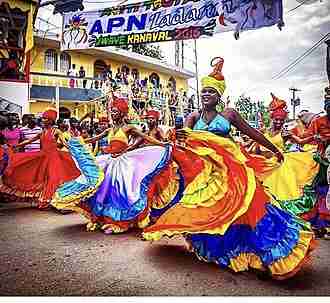
The Haitian Carnival is one of the most iconic expressions of Haitian culture. Far more than a festival, it is a space for freedom of expression, social satire, and collective memory.
Definition of the Haitian Carnival
The Haitian Carnival is a major popular celebration that usually takes place before Lent. It brings together music, dance, costumes, parades, and artistic performances. The streets become open stages where people express themselves through movement, rhythm, and voice.
The Importance of the Haitian Carnival
Carnival plays a central role in Haitian society:
- It allows people to denounce social and political injustices
- It strengthens a sense of cultural belonging
- It transmits history and values to younger generations
- It celebrates the creativity and resilience of the people
Through masks, symbolic characters, and powerful lyrics, the Haitian Carnival becomes a mirror of society—a joyful and collective act of resistance.
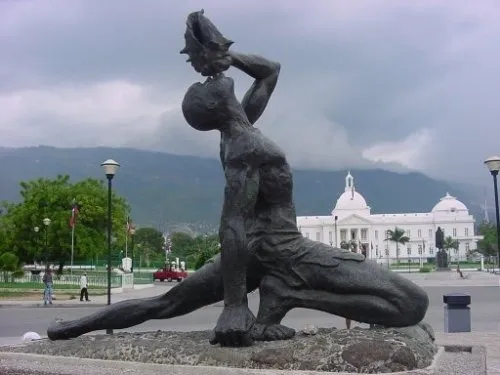
The Nèg Marron: A Symbol of Freedom and Dignity
It is impossible to speak about Haitian history and culture without acknowledging the figure of the Nèg Marron.
Who Is the Nèg Marron?
The Nèg Marron refers to an enslaved African who escaped plantations to live freely, often in the mountains. In Haiti, this figure became a powerful symbol of resistance, courage, and the pursuit of freedom.
The Nèg Marron refuses submission. He embodies the break from oppression and the reclaiming of one’s humanity.
The Nèg Marron in Collective Memory
Today, the Nèg Marron is far more than a historical figure. He is a cultural and spiritual icon, represented in statues, art, literature, and Afro-descendant thought.
He reminds us that freedom is never given—it is taken. He continues to inspire contemporary struggles for justice, equality, and the recognition of Black identities.
Why Celebrate Haitian Culture During Black History Month?
Celebrating Haitian culture in February means recognizing its fundamental role in the global history of Black peoples. It is also about honoring a memory that has too often been marginalized.
Highlighting the Haitian Carnival, the Nèg Marron, and cultural traditions allows us to:
- Celebrate African and Caribbean roots
- Encourage intergenerational transmission
- Inspire cultural pride
- Build bridges between history, culture, and modern life
Conclusion: Honoring the Past to Inspire the Future
Black History Month is an invitation to remember, but also to celebrate the richness of Black cultures in all their diversity. Haitian culture—through Carnival and the figure of the Nèg Marron—teaches us that resistance can be joyful, creative, and deeply human.
Honoring this culture means recognizing the strength of those who paved the way and continuing to keep their legacy alive—today and for generations to come.
Leave a Comment
Your email address will not be published. Required fields are marked *